 EN
EN
 AR
AR
 BG
BG
 CS
CS
 DA
DA
 NL
NL
 FI
FI
 FR
FR
 EL
EL
 HI
HI
 IT
IT
 JA
JA
 KO
KO
 NO
NO
 PL
PL
 PT
PT
 RO
RO
 RU
RU
 ES
ES
 TL
TL
 ID
ID
 UK
UK
 ET
ET
 TR
TR
 AF
AF
 GA
GA
 MK
MK
 BN
BN
 NE
NE
 KK
KK
 SU
SU
 UZ
UZ


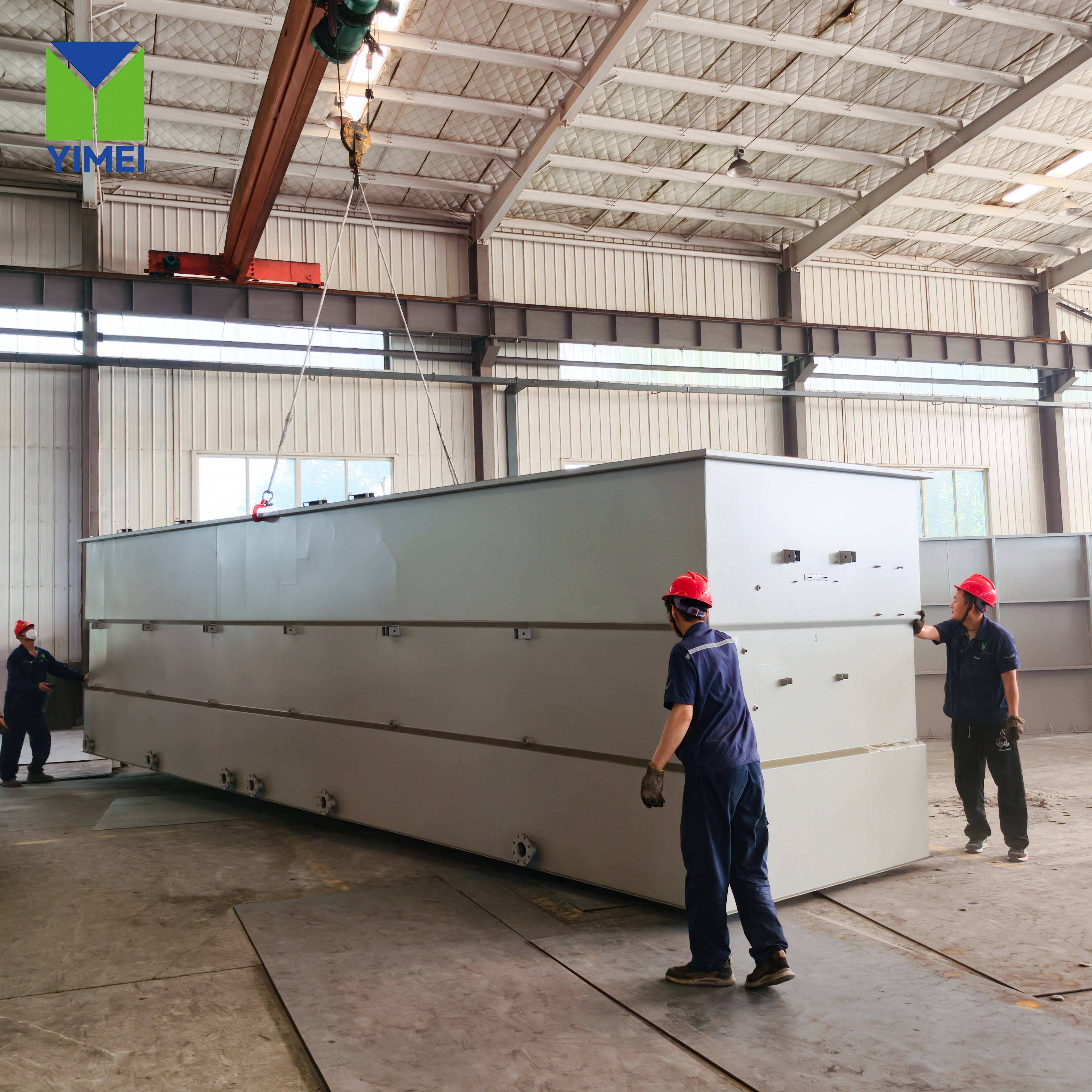
Selecting the Right Water Sewage Plant for Municipal Infrastructure Projects
The municipal infrastructure projects require a strong, reliable and cost-effective wastewater treatment solution. The choice of an appropriate water sewage plant is a complex matter that will affect the development of healthy communities, environmental fulfillment as well as long term operational expenses. As a famous environmental protection equipment design and manufacturing enterprise with more than 30 years of experience, Qingdao Yimei Environment Project Co., Ltd. provides guidance on the factors to consider when choosing a sewage plant for the municipal application.
Understanding Treatment Capacity and Flow Variability
One of the most basic factors when choosing a municipal sewage plant is the capacity of the plant to treat the sewage. In addition to average flows, municipal systems must deal with the peak flows caused by rainfall, population changes and diurnal flows. If capacities are underestimated, overflooding can occur, thus also environmental violations and risk to health of the public.
Capacity include hydraulic and/or organic loading. Hydraulic capacity relates to the plant's ability to treat flows, organic capacity, to the biochemical oxygen demand and pollutant loading. In a properly designed plant both of these parameters are configured to provide a constant treatment performance under a range of conditions.
Flexibility for communities to grow in modular designs. For plants that can be scaled-up incrementally, a good planning approach is to scale-up the plant incrementally, so that excess capacity of the early years is not needed, whilst at the same time providing sufficient capacity for future needs. Yimei's wastewater treatment equipment can also be scaled and, thus, adapt to the development and growth of the municipal infrastructure in the future.
Evaluating Treatment Processes and Technologies
There are normally three phases to municipal sewage treatment: primary treatment, secondary treatment, and tertiary treatment. The particular selection of technologies within each phase can have an impact on: treatment effectiveness, operational complexity, and life-cycle cost.
Primary treatment involves settling and screening of large solids and particles. The centerpiece of the biological treatment, known as secondary treatment, may utilize activated sludge, trickling filters or membrane bioreactors. The different technologies have their own merits for effluent quality, energy use and other operating costs.
A membrane bioreactor contributes high quality effluent, but has a higher energy consumption and intensive maintenance. There is much familiarity with and experience of conventional activated sludge systems, which are simple in operation and are a well-established technology with lower costs but occupy larger footprints. An SBR is a sequencing batch reactor that can be operated with variable flows and is suitable for smaller communities. As an integral part of the above biological treatment processes, Yimei's Lamella Clarifiers and Screw Dehydrators are efficient in removing solids and dealing with sludge.
Assessing Sludge Handling and Disposal Requirements
One of the most difficult areas of handling municipal wastewater is sludge management. A sewage plant's choice should also involve the consideration of sludge handling, dewatering methods and disposal solutions as they play significant roles in the cost of operation and impact upon the environment.
The organisms used for aerobic and anaerobic digestion are used for the stabilization. The biogas obtained from the anaerobic digestion can be utilized for energy recovery, which in this way lowers operating costs. Screw dehydrators and such like dewatering equipment compress the volume of sludge, which decreases transportation and disposal expenses. Local regulations, infrastructure, and the community's willingness to accept the disposal method will decide whether land application, incineration, or landfill is used.
Yimei's Screw Dehydrator is a very efficient system of dehydrating the sludge, with very little energy usage and very little maintenance; It is very well suited for domestic sludge dehydrating, which can be easily controlled and predicted. Yimei's Screw Dehydrator is an efficient sludge dewatering system, which has the characteristics of little energy consumption, low maintenance and simple operation, which is suitable for the dewatering treatment of domestic sewage sludge to which the principle of operation is paid attention.
Considering Lifecycle Costs and Operational Requirements
Initial capital cost is just one of the several factors to be considered in selecting a sewage plant. The following should be taken into consideration for lifecycle cost analysis: energy usage, chemical usage, plant maintenance needs, and replacement parts over the plant's life. Energy efficient technologies, such as optimum aeration controls and Variable Frequency Drives (VFDs), are significant long term cost reductions.
Choices will also be based on operation needs. For remote regions, a strong, resilient system that allows for infrequent lapses in operator attention may work well. Higher levels of automation and remote monitoring at urban facilities can help to lower staffing requirements. Canteen trained operators and technical support available in the region should also be taken into account.
Yimei and its 72 engineers and technicians offers the complete technical support for a municipal project so that the equipment selected to provide the desired project function delivers dependable service over the equipment life. Membership of the Shandong Province Environmental Protection Industrial Association is a reflection of the company's quality assurance and industry standards.
Conclusion
The proper choice of the water sewage plant for the municipal project of infrastructure requires review of treatment capacity and process technologies, treatment sludge management and assessment of the costs of the life cycle of the plant. Similarly, by aligning these considerations with community needs, and local conditions, municipalities can provide reliable and cost-effective wastewater treatment which safeguards public health and the environment. Qingdao Yimei Environment Project Co., Ltd. provides a team with the skills and tools necessary to ensure the success of municipal projects. Contact us today to talk about your community's municipal infrastructure needs and how our solutions are meeting their needs.