 EN
EN
 AR
AR
 BG
BG
 CS
CS
 DA
DA
 NL
NL
 FI
FI
 FR
FR
 EL
EL
 HI
HI
 IT
IT
 JA
JA
 KO
KO
 NO
NO
 PL
PL
 PT
PT
 RO
RO
 RU
RU
 ES
ES
 TL
TL
 ID
ID
 UK
UK
 ET
ET
 TR
TR
 AF
AF
 GA
GA
 MK
MK
 BN
BN
 NE
NE
 KK
KK
 SU
SU
 UZ
UZ


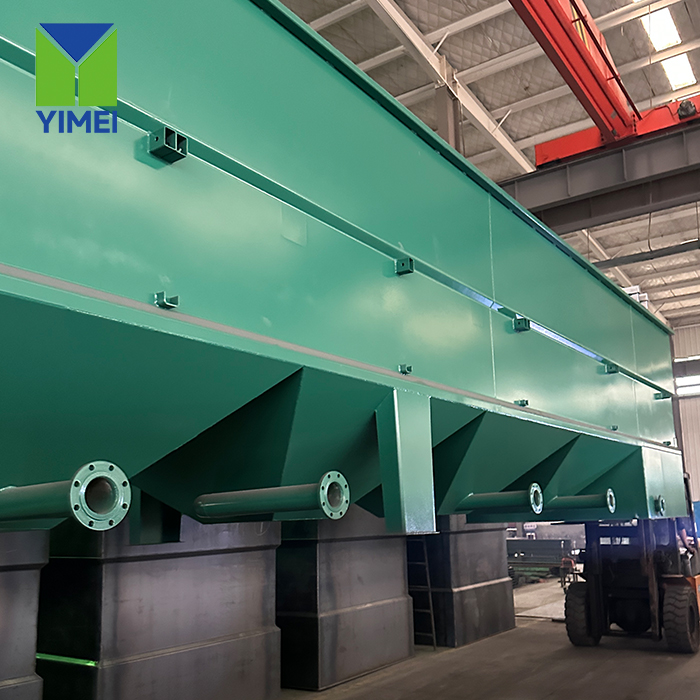
Many industrial effluents contain compounds that include complex organic molecules, which are not amenable to treatment with the usual biotechnological and physico-chemical techniques . Known as "recalcitrant" pollutants, these threat the environment and human health to an extraordinary degree, and need more powerful solutions to treat them. AOPs may prove to be one key technology that can help resolve the problems mentioned above, as they possess the ability to mineralize as many contaminants as possible to render them harmless by-products . Qingdao Yimei Environment Project Co., Ltd., who has more than 30 years experience in the design and manufacturing of environmental protection equipment, fully understands that AOP technologies are to be increasingly added in the comprehensive wastewater treatment scheme.
Understanding Advanced Oxidation Processes
Advanced Oxidation Processes refer to chemical technologies developed to eliminate organic and inorganic substances from water and sewer by oxidation reactions . The products of these processes are especially reactive, their oxidation potential being second only to fluorine -10, with the primary product being hydroxyl radicals.
Unlike traditional treatment techniques, which move pollutants within the same phase, complete mineralisation can be obtained with AOPs, complex organic molecules being mineralised to carbon dioxide, water and inorganic salts . This makes them highly useful for wastewater treatment with toxic and biorecalcitrant pollutants which cannot easily be dealt with in the environment.
The wide range of applications and possibilities with AOPs makes its use possible for various industrial processes such as chemical manufacturing, pharmaceutical production, food and beverage processing, dangerous wastes treatment etc. The fact that they are powerful in disinfecting, decolorizing and deodorizing also greatly expands the use of those.
Key AOP Technologies and Their Mechanisms
A number of AOP technologies are widely used in WWTF treatment systems and they have different mechanisms and applications.
The ozone based processes involve an ozone gas oxidation process that produces hydroxyl radicals and the process may be applied with UV or hydrogen peroxide. These systems produce high yields of reactive species and have a broad pH range.
Hydrogen peroxide reacts with iron salts to give the hydroxyl radicals which are known as the fenton and fenton-like process. These systems have good degradation efficiency and they are rather easy to implement. The challenges include: pH sensitivity and the productivity of iron sludge that needs to be treated after the generation.
The photocatalytic processes are based on semiconductor catalysts such as titanium dioxide or zinc oxide and UV or visible energy to produce active species. The processes do not involve any extra chemicals other than the catalyst and light source, making them environmentally attractive. However, the recovery of catalysts and the limitations of mass transfer are possibilities that can be improved upon.
Electrochemical AOPs involve direct electrochemical oxidation/electro-Fenton reactions that produce hydroxyl radicals at the surface of an electrodes. Boron-doped diamond (BDD) electrodes are highly efficient (up to 93% chemical oxygen demand removal) in the subjecting of real wastewater.
Integration with Conventional Treatment Systems
It would be difficult to administer AOPs as one treatment approach. They have the highest value when combined with traditional biological/physical treatment systems.
For pre-treatment applications, expensive AOPs are used to break down recalcitrant compounds to more biodegradable ones prior to biological treatment. This makes it easier for them to work in the downstream processes, and reduces the total treatment expenses.
The post treatment application further polishes effluent from biological treatment systems, taking away residuals that persist longer and cannot be removed from the treated water by biological treatment systems to adhere to the stringent discharge requirements. This is true especially in water recycling and reuse systems.
Integration of hybrid technology, like AOP with MF and/or biological treatment, can combine beneficial features to further enhance wastewater treatment efficiency as well as minimize consumption of chemicals and energy. Yimei's wastewater treatment equipment, such as Lamella Clarifiers and Screw Dehydrators can be very effectively combined with AOP technologies, such that a complete treatment train is developed that offers both a separation of solids and sludge handling.
Challenges and Future Directions
Although AOPs are effective and desirable, there are several challenges that affect their uptake. Another critical issue is the energy consumption, for the photo-ozonation systems 7 – 161.8 kWh/m3/ord and for the photoelectrochemical oxidation systems 39.3 – 331.8 kWh/m3/ord . The high operating costs, especially for Fenton based systems, may hamper large scale applications.
Other factors such as catalyst degradation, recovery, mass transfer and the possible generation of secondary products must be carefully controlled. Despite these shortcomings, active materials science and process optimization advances remain ongoing, with new technologies like UV-LED reactors, plasma oxidation and AI-driven hybrid reactors also making their debut.
Conclusion
AOPs represent an important technology that is used today in waste water treatment for the degradation of recalcitrant organic compounds which cannot be degraded using other methods. They can be configured with biological and physical treatment systems to form a complete treatment plant that maintains even more demanding regulations and can be used for water recycling programs. Qingdao Yimei Environment Project Co., Ltd. provides the equipment and know-how that can be integrated into wastewater treatment plants using AOP technologies, proven by its digging skills for trustworthy separation and handling of solids, and to industrial processing lines. Contact us today to know how our solutions can work in tandem with your cutting-edge treatment plans.