 EN
EN
 AR
AR
 BG
BG
 CS
CS
 DA
DA
 NL
NL
 FI
FI
 FR
FR
 EL
EL
 HI
HI
 IT
IT
 JA
JA
 KO
KO
 NO
NO
 PL
PL
 PT
PT
 RO
RO
 RU
RU
 ES
ES
 TL
TL
 ID
ID
 UK
UK
 ET
ET
 TR
TR
 AF
AF
 GA
GA
 MK
MK
 BN
BN
 NE
NE
 KK
KK
 SU
SU
 UZ
UZ


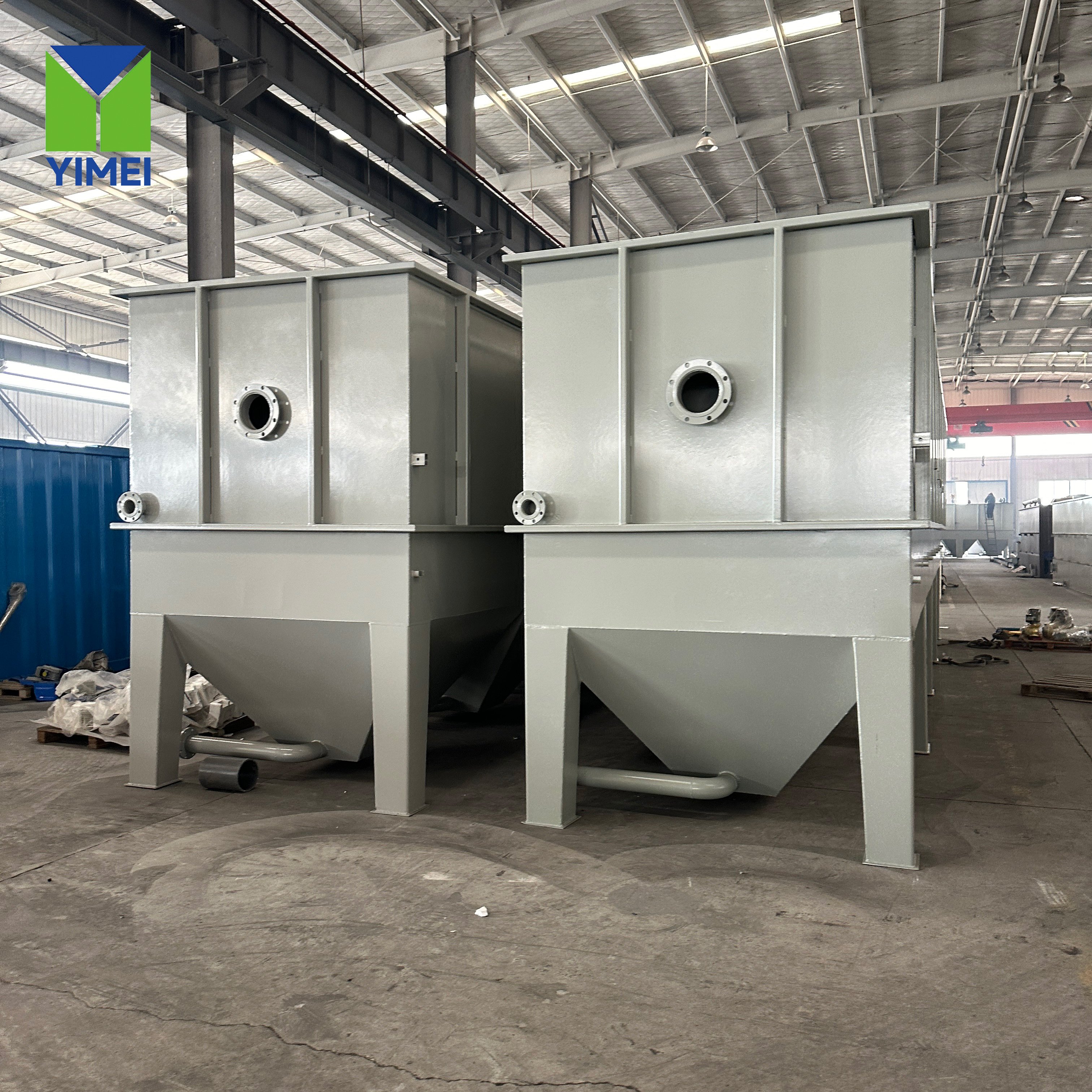
The ratio of circulation to water level is one of the most important factors in designing a lamella clarifier and a significant factor in the size, space and cost required for operation of the equipment. When overflow rate requirements are well understood and properly calculated, the clarifier is able to achieve the desired solids removal efficiency, not outside of the hydraulic constraints. The Yimei Environment Project Co., Ltd. has designed and manufactured environmental protection equipment for more than 30 years, based on rigorous environmental protection engineering principles, tracing and solving the problems of industrial wastewater treatment, providing reliable solutions for industrial wastewater treatment.
What Is Overflow Rate and Why It Matters
Overflow rate is used to express the hydraulic load in flow/area (usually in cubic metres/square metre/hour, or gallons/minute/square foot) on a settlers, clarifier or settling basin. It is sometimes called the surface loading rate or surface overflow rate. The effective settling area in the case of lamella clarifiers is significantly greater than the settling area itself, since it consists of inclined plates, and as a result of this configuration, much higher overflow rates are allowed than in a conventional sedimentation basin.
To attain good solids removal, the overflow rate has to be low, compared to the settling velocity of the particles of interest. When the overflow rate is greater than the particle settling rate, solids will be carried out as effluents, which will not only affect effluent quality but will also lead to a reduction in the efficiency of treatment. The surface loading rates vary from 10 to 25 m³/m²/hr for typical lamella clarifier applications, and can achieve up to 95 percent reduction in the footprint over and above the footprint of a normal horizontal flow clarifier.
Calculating Effective Settling Area and Overflow Rate
The overall settlement area of a lamella clarifier depends on the dimensions of the individual lamella pieces. This area is obtained from the sum of the horizontal projections of all plates in the plate pack. This formula is usually calculated by multiplying number of plates, plate length, plate width and the cosine of the plate angle of inclination.
The overflow rate then is the ratio of the influent flow rate to the total effective settling area. Application rates are limited for plate settlers based on regulatory requirements. Some jurisdictions, for instance, dictate a maximum loading rate for plates using the projected horizontal amount of plate area. In applications where demanding overall performance demands conservative design with lower overflow rates, is generally a better choice.
Factors Influencing Overflow Rate Selection
A number of considerations are taken into account with the lamella clarifier design when determining the overflow ratio. Laboratory column settling tests are used to calculate the settling velocity of solids, the one most important parameter. The settling velocity of the particles being settled has to be greater than the overflow rate of the design.
The inclination angle of the plate has a great impact on the effective settling area and the characteristics of the sludge on the plate. Usually, plates are fastened at 55 to 60° horizontal. Research has indicated that the steepest removal efficiencies (45–65) occur with plate inclination. Overflow rate capacity is also affected by the width of the plates: A lower spacing will have a higher rate capacity but will possibly create clogging issues.
Overflow rate selection will also depend on the characteristics of the wastewater that is being treated and the solids characteristics. The overflow rates would be different for poor settling sludges and good settling sludges. The practical values vary between 0.1 m to 0.5 m/h for difficult sludges and from 0.5 to 1 m/h for easily settling material based on settling area.
Optimizing Design for Specific Applications
Minimal and significant range of requirements for overflow rate, depending on its application. Typically the flow rates of municipal wastewater treatment are higher than fine or slow-settling particles used in industrial applications. Rates of overflow may be as low as 10 to 25 percent to ensure safety for metal finishing and chemical treatment effluent applications, depending on the type of solids that are removed.
An adjustable plate configuration in the lamella clarifier provides the flexibility to optimize the system according to the solids loading and flow rates. The length, spacing and angle of inclination of the plates can be adjusted to optimize the capacity of effective settling area and overflow rate as needed to achieve treatment goals. The use of the high-density polyethylene plates provides for reduced maintenance and yet retains the effectiveness of solids removal.
The Lamella Clarifiers and Screw Dehydrators from Qingdao Yimei Environment Project Co., Ltd. are designed with careful consideration to overflow rate requirements with the aim of reliable working for various industrial applications. By utilizing state-of-the-art technology as well as cost effective pricing, we provide solutions to meet the highest treatment standard.