 EN
EN
 AR
AR
 BG
BG
 CS
CS
 DA
DA
 NL
NL
 FI
FI
 FR
FR
 EL
EL
 HI
HI
 IT
IT
 JA
JA
 KO
KO
 NO
NO
 PL
PL
 PT
PT
 RO
RO
 RU
RU
 ES
ES
 TL
TL
 ID
ID
 UK
UK
 ET
ET
 TR
TR
 AF
AF
 GA
GA
 MK
MK
 BN
BN
 NE
NE
 KK
KK
 SU
SU
 UZ
UZ


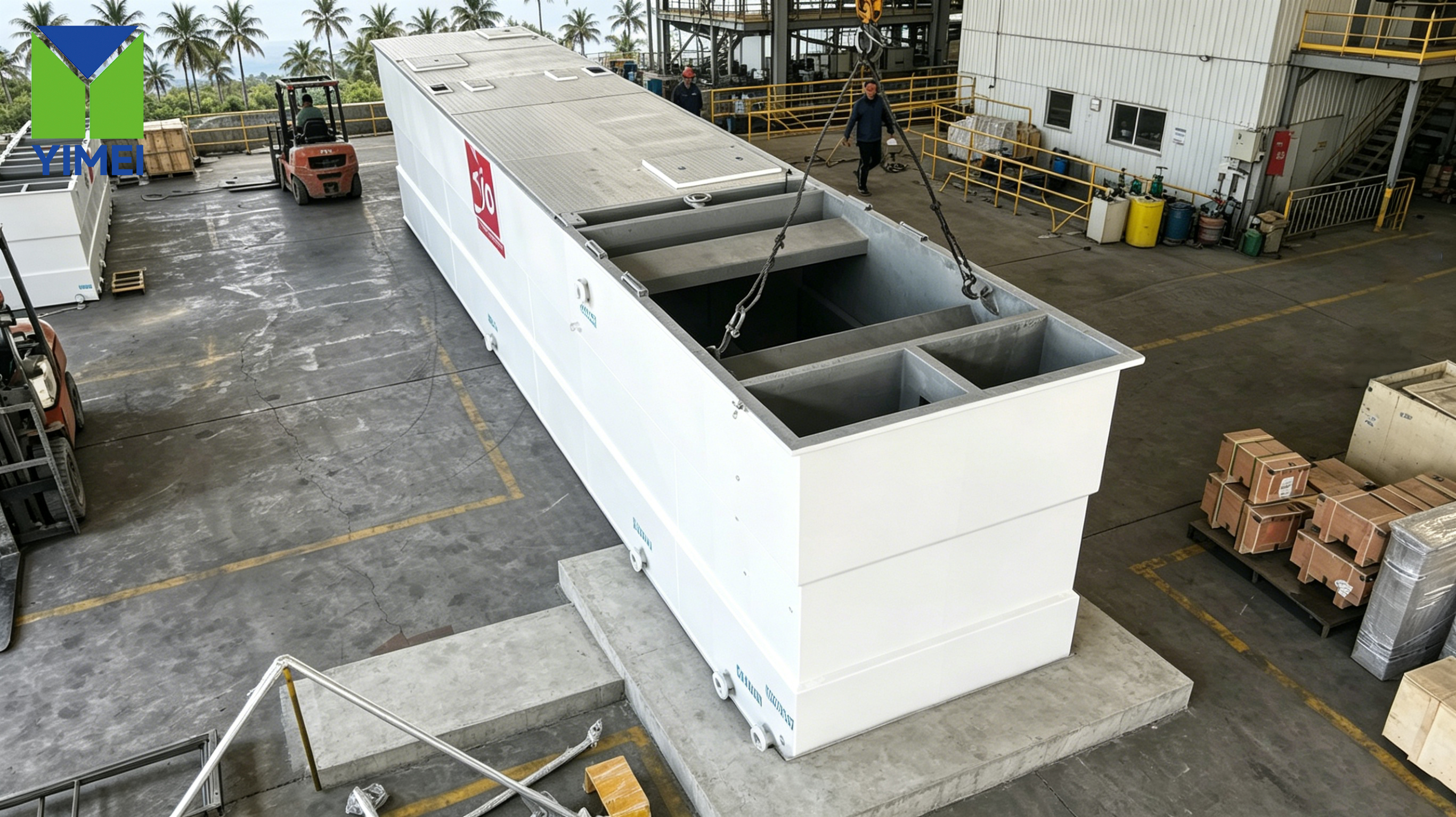
When we talk about waste water treatment, it's necessary to discriminate waste water treatment system for municipal sewage and industrial waste water. Both are designed to remove contaminants from waste water and to protect the environment, yet they present some basic differences between the type of influent, the issues to be treated and the technology required to effectively treat them. With over 30 years' experience on the design and production of environmental protection equipment, Qingdao Yimei Environment Project Co., Ltd. Presents tailor-made solution to address those needs:
Composition and Concentration of Pollutants
Primarily, the concentration and composition of the waste water differs; municipal waste water, or sewage, mostly comprised of human waste and food residues, domestic chemicals-is low in concentration, relatively constant flow rate and composed of reasonably consistent components.
On the contrary, industrial waste water is the direct by-product of manufacturing process and it's highly variable. Depending on the specific industry involved, it could contain quite high organic, fats, oils, and grease (FOG) and toxic chemicals such as toxic elements and heavy metals. BOD of normal city sewage is around 400 ppm, and that of industrial sewage can be from 500 ppm up to 150,000 ppm. It's not able to treat extreme high concentration and toxic components with normal municipal treatment systems.
Variability and Predictability of Flow
Municipal waste water treatment plant are designed to operate with stable and predictable influent composition and flow. The biological component treats the organic substance contained in domestic sewage effectively and process modifications mostly relate to accommodate storm water loading.
However, industrial waste water is extremely variable; the loading quantity and its composition fluctuate significantly based on the operation conditions in different hours and days, seasonal changes and production cycles (e.g. Batch production). This inherent fluctuation presents a challenge for traditional waste water treatment systems that were originally designed to handle fairly stable flows and contaminant loadings. Industrial waste water is complex and diverse in characteristics that can only be efficiently treated by versatile treatment methods capable of dealing with wide variations in loading conditions.
Treatment Processes and Technologies
Typically, each treatment system contains primary, secondary and maybe tertiary units but the types of technologies applied differ.
Biological process is used as the primary approach for municipal waste water treatment to remove organic matter from sewage. Treatment technologies are based on a mixture of aerobic bacteria's abilities and can take form in trickling filters, activated sludge systems or membrane bioreactors (MBRs). These processes are very suitable for the removal of organic materials of low to medium strength and rely on aerobic micro-organisms which require the presence of oxygen to degrade contaminants.
Industrial waste water treatment typically involves a combination of physical, chemical and specialized biological processes. DAF (dissolved air flotation) is frequently applied for FOG and suspended solids removal; anaerobic digesters for high strength organic waste; Sequencing batch reactors for organic and nutrient removal. Membrane bioreactors (MBRs), when used in industrial application, are capable of treating much higher organic loading with smaller footprint, and producing higher quality of effluent. Equipment like Lamella clarifiers and Screw dehydrators from Yimei are specially designed to tackle the difficulties encountered in the industrial sludge treatment and solid-liquid separation processes.
Regulatory Context and Discharge Options
Regulation regarding waste water treatment is also varied. Discharged industrial waste water might require a preliminary treatment process to remove high levels of organic matter, toxic elements and/or nutrient components. In many situations, industries have a pre-treatment facility to treat the waste water and send the semi-treated water into municipal sewer system. If, for instance, the effluent is too strong or too variable, the system will overload causing a non-compliance and financial penalty.
In many cases, industries need to undertake 100% of treatment on-site to comply with strict discharge permits before discharging to the surface water. Thus, industrial sectors must own appropriate treatment systems composed of multiple physical, chemical and biological units, and efficient and reliable sludge handling equipment is required to manage the resultant sludge generated in the process.
Conclusion
Differences between industrial and municipal waste water treatment lies in their origin, the composition of the influent and the flow. Biological processes serve as the main component in the Municipal treatment plants, which deal with a mixture of domestic wastes, low concentration and reasonably predictable parameters. The industrial effluent is varied in composition, high in strength and complex. Industrial wastewater requires the use of a combination of physical, chemical and advanced biological processes to meet applicable discharge standards. Qingdao Yimei Environment Project Co., Ltd. provide industries across the globe with dedicated equipment necessary to meet such requirement and environmental protection.